Catfish Jumping Embroidery Design Review
First Impressions: A Playful and Bold Design
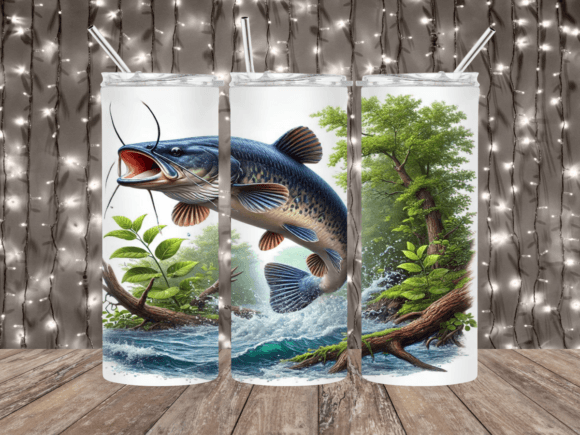
At first glance, Catfish Jumping feels like a design that’s meant to stand out. The dynamic pose of the catfish mid-leap gives it a sense of motion and energy that’s hard to ignore. It’s not your typical subtle embroidery pattern—it has a boldness that screams for attention. The level of detail in the fish’s fins and the rippling water beneath it suggests this is a design that was created with intention and care.
The mood it creates leans toward playful yet slightly whimsical. This makes it ideal for projects where you want to inject a bit of character without going overboard. I can already picture it on a custom tote bag or even a baby onesie—something that adds personality without being too overwhelming.
Real-Life Use: How Catfish Jumping Stands Up in Practice
When considering how Catfish Jumping would perform in real embroidery work, I imagine using it on a variety of surfaces. For example, if I were preparing a custom embroidered sweatshirt for a small shop product, I’d look at how the design interacts with the fabric texture and color. On a light-colored cotton sweatshirt, the contrast between the design and the background would be clear, allowing the catfish to pop. However, on a dark fabric, the same design might need some adjustments in thread colors or stabilizer use to maintain its visual appeal.
This design works particularly well for custom apparel, tote bags, and embroidered patches. Its size flexibility means it can be scaled down for a small patch or stretched out for a larger project. That said, resizing should be done carefully, as the original file is a JPEG digital file only, and the background isn’t transparent. Be sure to know how to resize before purchasing, as mentioned in the product description.
I see Catfish Jumping fitting nicely into handmade products and personalized gifts, especially around holidays or as part of a themed collection. It could also serve as a great digital embroidery file for Etsy sellers or craft business owners looking to add a unique touch to their listings.
Where to Use with Caution
While Catfish Jumping is a strong design, there are certain scenarios where it may require extra attention. For instance, if you plan to stitch it onto a small hoop size, the details in the fins and water might get lost or distorted. Similarly, on textured fabrics or thin materials, the design might not hold up as well without proper stabilizer.
Stretchy fabrics like knits or jerseys can cause the design to shift during stitching, so it’s important to test it on scrap fabric first. Also, when placing the design on curved surfaces like caps or layered garments, the layout might need some tweaking to avoid awkward spacing or overlap.
For commercial embroidery or product manufacturing, pay close attention to stitch density and thread color contrast. If the design is too dense, it could cause puckering or damage to the fabric. And if the colors don’t contrast well, the final finished product might not look as vibrant as intended.
Design Notes for Embroidery Professionals
If you’re an embroidery designer or apparel decorator, here are a few practical tips to keep in mind when working with Catfish Jumping:
- Test on scrap fabric: Always do a test run before committing to a full project. This helps identify any issues with stitch placement or fabric compatibility.
- Check thread color contrast: Make sure the colors you choose complement the fabric you're using. A high-contrast color will make the design more visible and appealing.
- Review stitch density: If the design has dense areas, consider adjusting the stitch count or using a stabilizer to prevent fabric distortion.
- Confirm hoop size: Ensure the hoop size matches the design dimensions to avoid stretching or cutting off important details.
- Inspect small details: Look closely at the finer elements like the fish’s eyes or the water ripples. These can be easily overlooked but are crucial for the overall look.
- Test in black and white mockups: This helps evaluate how the design will look on different fabric backgrounds before finalizing thread colors.
- Use proper stabilizer: Especially on stretchy or thin fabrics, using the right stabilizer can make a big difference in the finished product’s quality.
- Check licensing terms: Before selling any finished items or digital products, confirm the license allows commercial use.
These steps ensure that Catfish Jumping doesn’t just look good on paper but translates well into a professional embroidery project that customers will love.
Final Thoughts: A Versatile Addition to Your Design Collection
Catfish Jumping is a fun, expressive design that can elevate a wide range of embroidery projects. Whether you're creating a personalized gift, a small shop product, or a commercial embroidery asset, this design has the potential to add a unique flair to your work. Just be mindful of the practical considerations—like fabric choice and stitch density—to ensure it looks as great in practice as it does on screen.
If you're an Etsy seller or craft business owner, this could be a great addition to your design assets for holiday embroidery, nursery decor, or custom apparel. As long as you take the time to test and adjust, Catfish Jumping can become a favorite go-to design for your next project.